

Reflecting on AI and Consecrated Life: Spiritual, Ethical, and Pastoral Perspectives
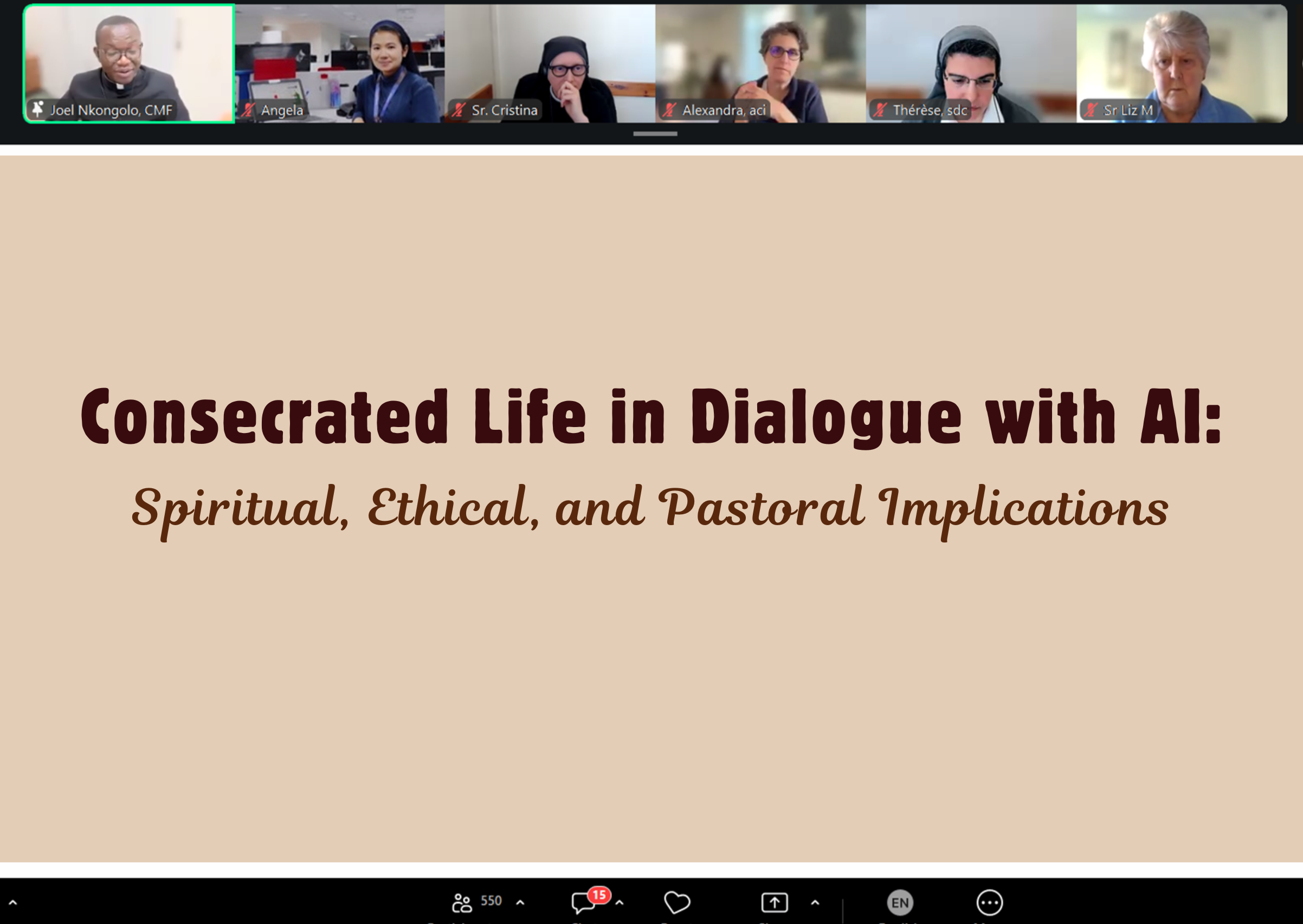
On Wednesday, April 29, 2026, MMI and UISG organized an online webinar entitled “Consecrated Life in Dialogue with AI: Spiritual, Ethical, and Pastoral Implications.” More than 500 participants from around the world joined the event, including communicators, members of religious congregations, formation leaders, and pastoral workers. Sr. M. Emmanuela Sitorus FCJM and Sr. M. Angela Siallagan FCJM participated in the webinar.
The webinar opened with an introduction by Sr. Thérèse, who explained the communication partnership between MMI and UISG. Together with Sr. Alexandra, she led the participants in prayer before welcoming Fr. Joël Nkongolo, CMF, a Claretian missionary from the Democratic Republic of Congo who works in digital mission and communication at the Vatican.
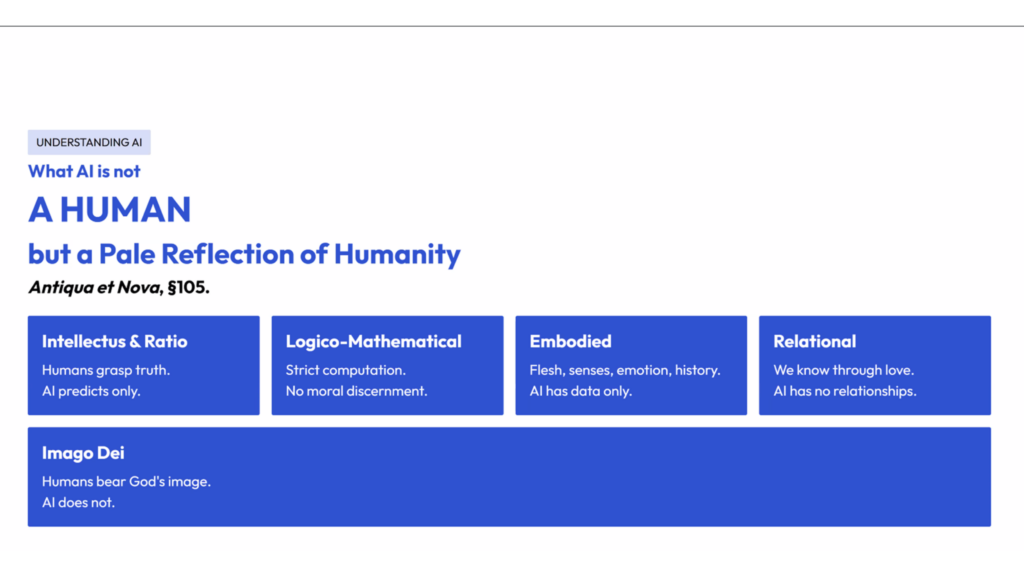
During his presentation, Fr. Joël reflected on the growing role of Artificial Intelligence (AI) in consecrated life. He explained that AI can be a valuable tool for translation, administration, and communication, but it cannot replace human intelligence, moral discernment, authentic relationships, or spiritual interiority. Referring to the Vatican document Antiqua et Nova, he emphasized that AI functions differently from human intelligence because it lacks embodiment, transcendence, and the ability to truly encounter others.
The discussion explored three important dimensions of AI: spiritual, ethical, and pastoral. In the spiritual dimension, participants reflected on the importance of silence, prayer, and personal reflection in vocational formation. Sr. Thérèse noted that while AI may help with many practical tasks, over-dependence on technology can weaken attention, journaling, and the interior life essential for consecrated persons.
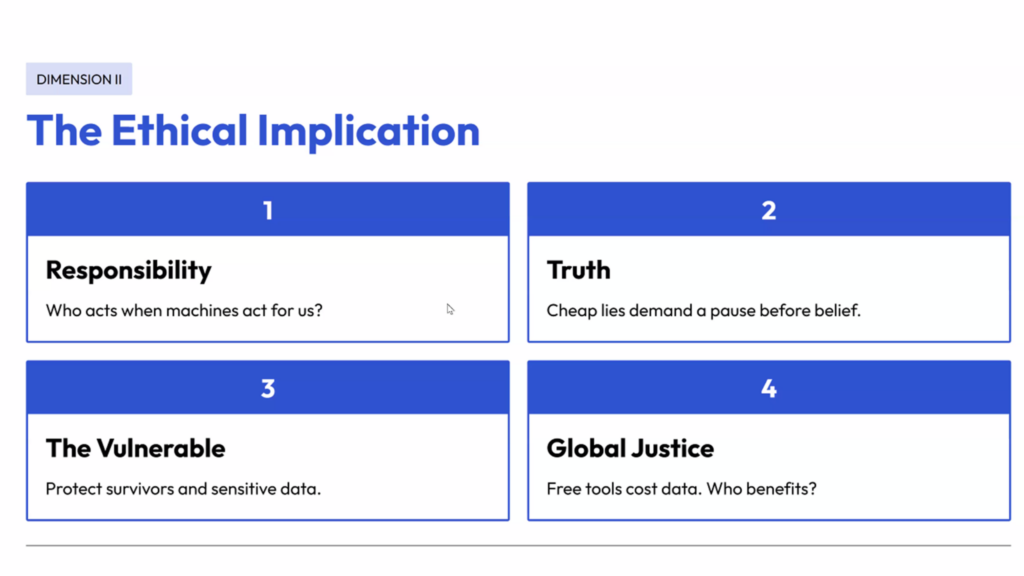
From an ethical perspective, Fr. Joël stressed that human responsibility can never be delegated to AI systems. He highlighted concerns related to data privacy, safeguarding vulnerable people, and the influence of powerful technology companies. He invited participants to evaluate AI through the principles of human dignity, the common good, subsidiarity, and integral ecology.
In the pastoral dimension, the speakers emphasized that AI cannot replace authentic human presence in ministry. While AI may assist in creating content or supporting communication, true accompaniment and discernment require personal encounter, compassion, and listening. The key question raised during the webinar was whether the use of AI helps deepen encounters with God and others, or instead replaces them.
The webinar concluded with an invitation for religious communities to approach AI with wisdom and discernment. Rather than fearing technology, participants were encouraged to use it responsibly while remaining faithful to the core values of consecrated life: prayer, community, human encounter, and service. Upcoming webinars on AI are scheduled for May 29 and June 26, 2026, with Fr. Mauro Grosso as presenter.
Written by Sr. M. Angela Siallagan FCJM