

Face Masks Made from the Cooling Powder of Eco Enzymes
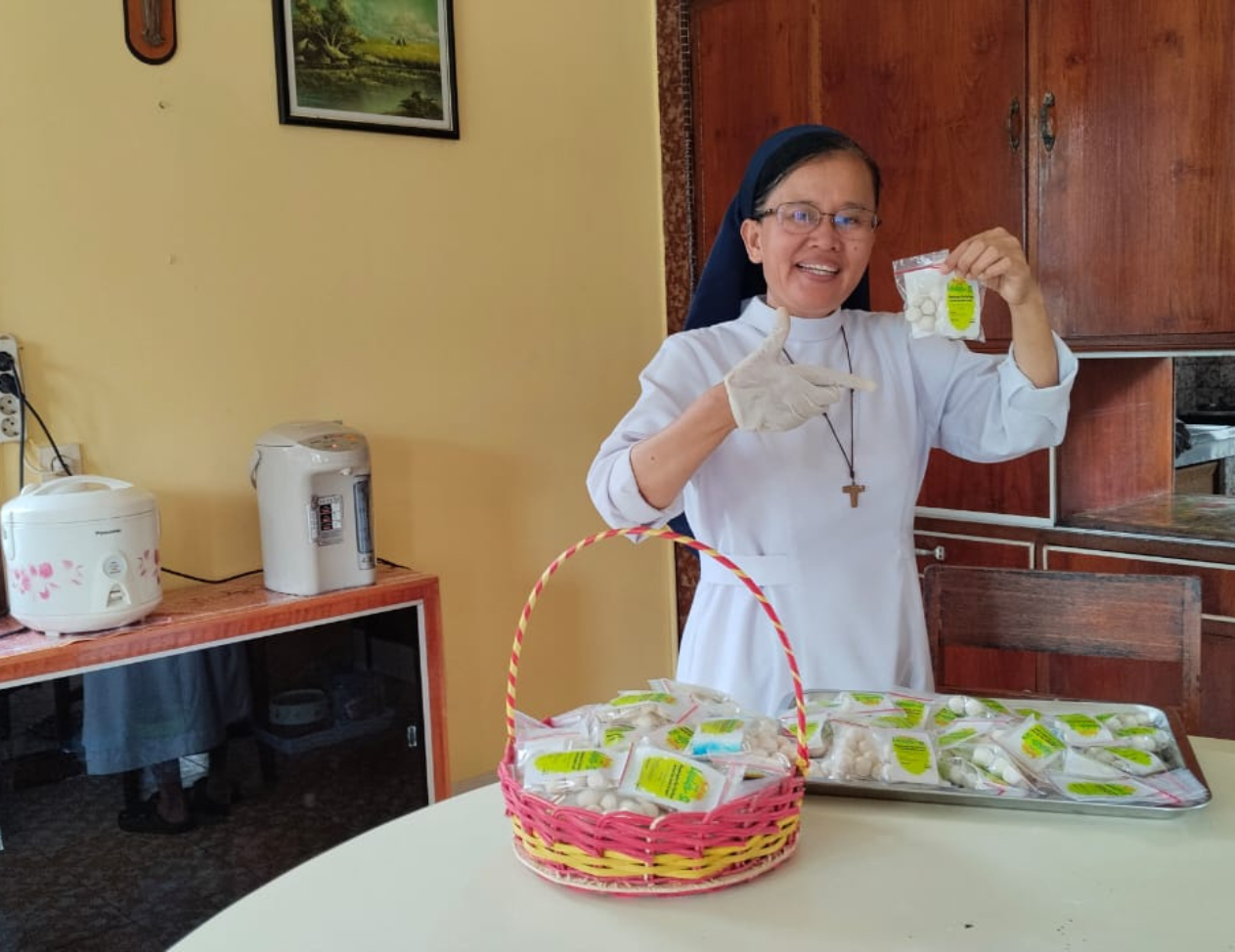
Sr. M. Harianja FCJM, the JPIC Coordinator for the Indonesian Province, initiates activities related to the mission of Justice, Peace, and Integrity of Creation. Our Indonesian sisters in communities, schools, and formation programs benefit from these JPIC actions.
One of the activities is processing eco-enzymes. According to Greenpeace, eco-enzymes are multipurpose liquids produced from the fermentation of organic waste, such as leftover food and clean fruits and vegetables. Eco-enzymes have many benefits, including a use as plant fertilizers, killing pathogens, addressing certain health issues (including maintaining skin health), cleaning the environment, improving water quality, and reducing organic waste.
Processed organic materials can be used to make many products, such as fertilizer, soap for cleaning floors, car fresheners, natural pesticides, and cooling powder.
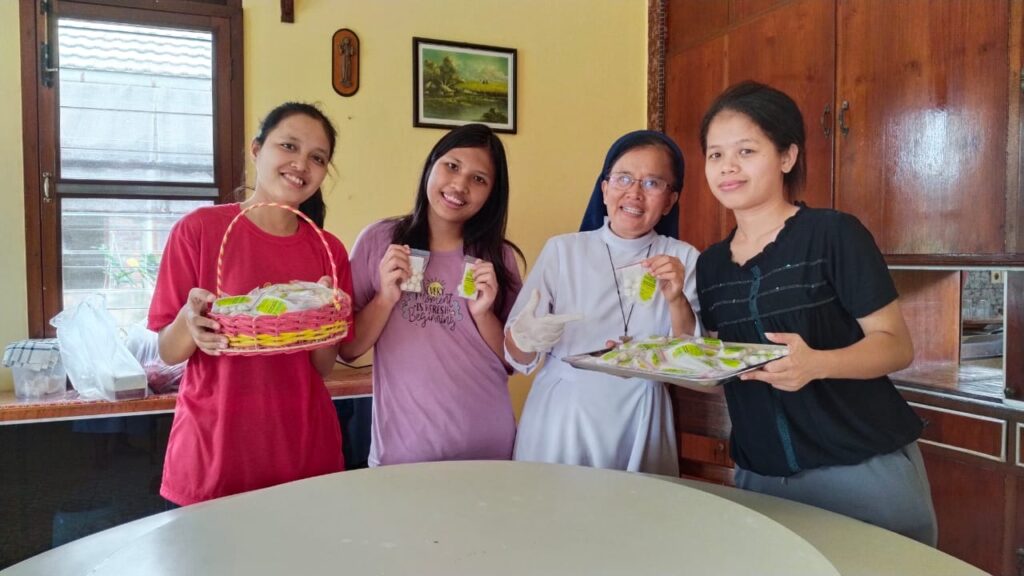
In May and June of 2025, Sr. Monika practiced making face masks from eco-enzyme. She made the masks because she noticed that many women wanted to try natural ingredients. The necessary ingredients are rice flour, eco-enzyme, aloe vera juice, and fruits known for promoting skin health. Eco-enzyme is a fermented liquid made from leftover fruits and vegetables. It contains enzymes and good bacteria that can help cleanse the skin, moisturize it, and maintain its health.
Sr. Monika and others have used the face masks she made. She said that using cooling powder is one way we can care for the Earth because it reduces or even eliminates the use of materials containing chemicals. Over time, introducing people to ways to care for the earth has become a passion for Sr. Monika.
The process of making the face masks takes about three days from start to finish. Once ready, the eco-enzymes powder provides benefits such as protecting the skin from the sun, preventing prickly heat, slowly reducing dark spots, soothing the skin, tightening the skin, and reducing excess oil. The cooling powder can also help overcome acne and other skin problems because it contains antibacterial acetic and lactic acids.
Written by Sr. Monika Harianja FCJM and Sr. Angela Siallagan FCJM
Edited by Sr. Sheila Kinsey FCJM